
Introduction
An unwinding inbox, a poorly prepared exam, or a conversation best avoided until Monday .Most human beings can relate to stress as something that is not an outlier or peak experience, but a part of daily grind. A familiar sensation, yet one that few would ask themselves what goes on in the mind during these episodes.
Once we understand these internal mechanisms that shape the human response to stress, we can clearly see how they affect an individual in the present and long term, helping us recognize warning signs and manage them effectively.
The goal of this article is to discuss stress and touch upon all of the ways it affects people, both in the short and long-term, provide an outline of effective management techniques, and advise on when to seek professional help if needed.
What Is Stress?
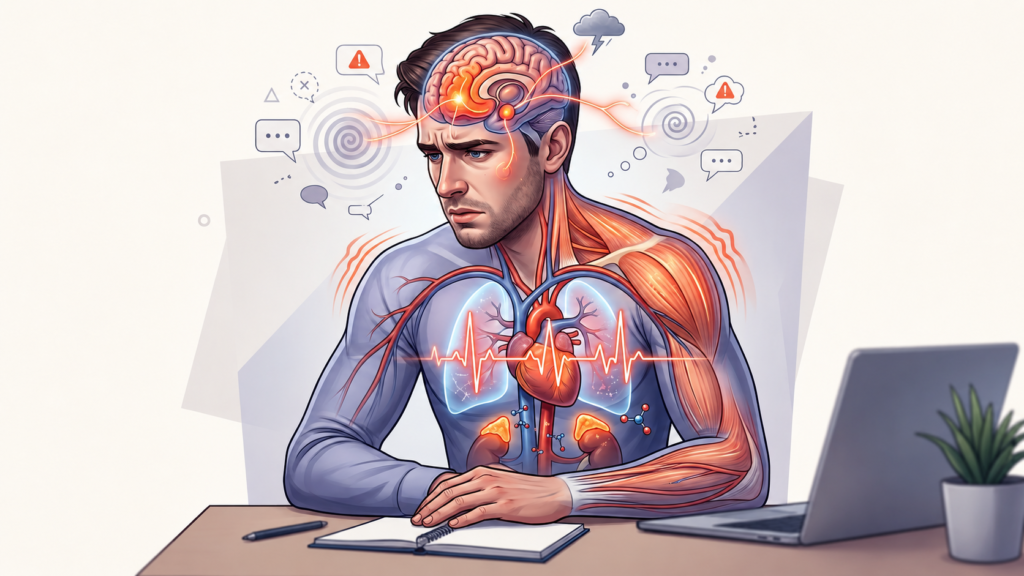
Stress is the response of the body and mind to a stimulus that requires a reaction. Something occurs that threatens or challenges an individual, and their body begins to produce physical effects such as increased heart rate or tension in the muscles. The mind narrows one’s focus on the stressful situation, and the body prepares for either fight or flight.
This response has been evolutionarily advantageous to humans and has had a big part in survival. While stress as a general concept is neither inherently good nor bad, we can easily distinguish between two main types: acute and chronic.
Occasional, short-lived events usually cause acute stress, while ongoing pressures can cause chronic stress and continue for a prolonged period without showing signs of resolution. Stress is not exclusively a mental phenomenon, but the psychological effects of it are no less tangible.
How Stress Affects the Human Mind
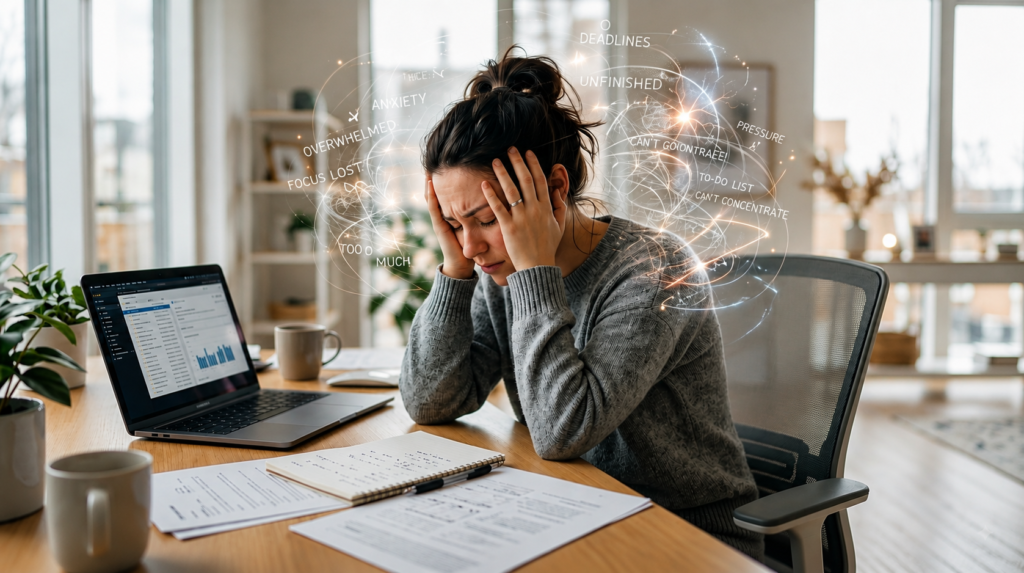
As long as stress continues, it affects the mind in several ways, most of which can cause harmful effects in the long run. During a stressful episode, reduces concentration, weakens memory, impairs decision, and intensifies emotions. Once the immediate effects have subsided, lasting changes are more difficult to identify and dismiss as normal.
Stress and Concentration
Stress often results in a sharp focus on the source of the stress rather than on the task at hand. Racing thoughts or a distracted mind are commonly reported symptoms of stress, and the ability to concentrate on things that require one’s attention is compromised.
A mild, occasional source of stress might briefly sharpen one’s focus and be beneficial for certain tasks, but generally, stress is more likely to contribute to difficulties with concentration.
Stress and Memory
Memory and recollection are closely linked to stress, primarily due to the effects that stress hormones have on the hippocampus and amygdala two areas of the brain that play a major role in the formation and retention of memories.
The effects can vary greatly from person to person and from situation to situation, but a higher stress level typically leads to challenges when recalling information and retaining it.
While increased levels of cortisol (a hormone released when the body is under stress) during the time of learning can actually help with memory formation, higher than average levels when trying to recall information can impair it.
This might be the reason why people find themselves struggling to remember things during critical moments such as an exam, despite having no issues doing so right before the test.
Chronic stress has also been associated with the gradual decline in short- and long-term memory, and stressful events in one’s life have shown to correlate with a reduction in memory performance.
Stress and Thinking
Stress encourages the mind to rely on quicker, simpler thought processes while avoiding the longer ones that require analysis and deeper examination of the circumstances. As a result, it becomes harder to think through things step-by-step, assess multiple possibilities, and arrive at the most optimal solution.
It is more common for stressful conditions to lead to broad generalizations when considering situations and events. This can manifest as a student struggling to grasp the meaning of a particular paragraph, even when re-reading it several times.
A busy professional finding themselves unable to keep track of things as they normally would. The effects of stress on thinking can range from mild inconveniences to severely detrimental effects in a professional setting.
Stress and Decision Making
Stress encourages the person to rely on established, reliable decision-making patterns to get to a resolution quickly without wasting time on analyzing the nuances of the situation. This can lead to decisions being made based on the most probable, well-established outcomes associated with certain actions, instead of exploring the full range of possibilities.
It is generally advisable to exercise caution when making important or complicated decisions when under stress, as well as whenever the circumstances do not allow for one to fully rely on familiar patterns of thought.
Stress can lead to an impulsive choice being made when a more measured approach would have been better, or when a difficult circumstance is avoided rather than dealt with directly.
Stress and Emotions
Emotions and mood tend to be directly affected by stress, as the mind is prone to focusing more on what could go wrong rather than on what is actually taking place.
As a result, individuals find themselves frustrated or agitated more often than usual, even by everyday circumstances. When under stress, it becomes harder to remain emotionally stable, particularly when one is unable to control whether or not a stressful event will take place.
How Chronic Stress Affects Mental Well-Being

Chronic stress affects the psychological aspects of an individual in much the same way that occasional stress does, but over a longer time period. Since it lasts for longer than a brief episode of stress, its effects are significantly more damaging.
The body and mind are unable to simply move on from it and restore itself afterwards. The long-term effects of chronic stress can be linked to a number of mental health problems, ranging from anxiety and low mood to a generally reduced ability to cope with everyday challenges.
People with pre-existing mental health issues find themselves especially vulnerable to its effects, although it is important to note that stress rarely presents as a diagnosable condition on its own.
A stress-induced episode, particularly when it lasts for an especially long amount of time, can be an important indicator of developing mental health problems. Regardless, it is impossible to predict how a person will specifically be affected by it.
Since the situation and an individual’s response to it play a major role.If chronic stress is significantly impacting one’s daily life it is advisable to consult with a medical professional about treating it or managing its effects.
Stress and Sleep
Stress and sleep are closely connected and can influence each other in several ways. High stress levels may make it difficult to fall asleep or remain asleep, while insufficient rest can increase feelings of tension and make daily challenges harder to manage.
Stress can cause individuals to let their minds wander while they are supposed to be resting, making it difficult for them to fall asleep easily or stay asleep for long periods of time. If sleep deprivation persists for a long time, it becomes especially important to address the issue before it starts affecting one’s daily life, since it can combine with stress and negatively impact both.
Common Signs of Stress
There are many ways in which stress can make itself apparent, and these signs can vary greatly from one individual to the next. Some common manifestations of stress include:
- Difficulty with concentration and focus;
- Irritability and emotional instability;
- Difficulty sleeping;
- Muscle tension;
- Fatigue;
- Headaches;
- Changes to one’s appetite;
- An overall sense of feeling overwhelmed or stressed.
Being mindful of these effects and being able to recognize them in oneself or others is an important skill that helps in addressing the issue before it escalates. Early intervention can make a significant difference, especially when chronic stress affects an individual and causes more severe effects.
How to Manage Stress
There are many established ways of dealing with stress and reducing its impact on daily life. Managing stress is an individual process, and the effectiveness of any particular method greatly depends on the person and the situation. Experts strongly support the following recommendations, and people can generally apply them in most circumstances.
Healthy Sleep Patterns
Adequate amounts of sleep are vital for counteracting the detrimental effects of stress.It helps the brain restore itself, regain cognitive abilities affected by stress, and prepare for the next day. Having healthy and consistent sleep patterns can be one of the most important parts of managing stress effectively.
Physical Activity
Engaging in regular physical activity is a great way to reduce the impact of stress on the mind. It releases endorphins, which are hormones that generally improve one’s mood and reduce stress levels. Any amount of exercise can be beneficial, although a daily walk is sufficient in most cases for most people.
Social Support
Staying in touch with friends, family, and the community is yet another crucial aspect of stress reduction. Asking for help from your social circle can effectively reduce stress. Close friends and family can provide emotional support, while community and religious organizations can offer practical assistance.
Support from others can be one of the most helpful tools in managing stress, as it can greatly reduce the burden that one carries on their own.
Time Management
Keeping track of day-to-day responsibilities and making sure that nothing is due before it needs to be can be surprisingly helpful in reducing overall stress levels. Breaking things into smaller, more manageable parts, prioritizing accordingly and leaving some buffer time for unforeseen circumstances all play a part in this.
Being able to manage everyday responsibilities without worrying about missing something important is essential for reducing stress levels.
Relaxation and Breaks
Short, uncomplicated breaks and routines designed to help the mind unwind are also a great way to combat the effects of stress. The amount of time necessary can vary greatly from one person to the next, even on a daily basis, but having something to relax during is invaluable in all circumstances.
Professional Intervention
When stress becomes too much to handle on one’s own, seeking professional medical assistance is always an option. Especially when the symptoms start to interfere with daily life or have a particularly severe effect on an individual, consulting with a doctor or a psychologist can be beneficial. It is important to remember that self-treatment is rarely as effective as professional assistance when addressing a serious issue.
Frequently Asked Questions (FAQs)
1. How does stress affect the human mind?
Stress can affect concentration, memory, thinking, decision-making, and emotions. Short-term stress may temporarily improve focus, but prolonged stress can negatively affect mental well-being.
2. Can stress affect memory?
Yes, stress can affect memory and recall. Higher stress levels may make it harder to retain and remember information, especially during important situations.
3. How does stress affect concentration?
Stress can make the mind focus heavily on the stressful situation. As a result, concentration on other tasks may become more difficult.
4. Can chronic stress affect mental well-being?
Yes. Chronic stress can have stronger long-term effects and may contribute to anxiety, low mood, and difficulty coping with everyday challenges.
5. Does stress affect sleep?
Yes. Stress can make it difficult to fall asleep or stay asleep. Poor sleep can also make a person more vulnerable to stress.
6. What are the common signs of stress?
Common signs include difficulty concentrating, irritability, sleep problems, muscle tension, fatigue, headaches, appetite changes, and feeling overwhelmed.
7. How can stress be managed?
People can manage stress by maintaining healthy sleep patterns, staying physically active, building social support, managing their time, taking relaxation breaks, and seeking professional help when needed.
8. When should someone seek professional help for stress?
Professional help may be appropriate when stress becomes difficult to manage or begins interfering significantly with daily life. A doctor or psychologist can help assess and manage its effects.
Conclusion
Stress has several detrimental effects on how the human mind operates, most of which tend to be more severe when it turns chronic rather than occasional. While it is generally normal and barely noticeable in most cases, extreme stressors can affect people in very serious ways.
The signs of stress are common, and recognizing them in oneself or others is crucial for seeking help and reducing the negative effects that it has on the mind.
Understanding how it works can help an individual identify the warning signs and respond accordingly, addressing a stressful situation before it turns into a debilitating episode for as long as it lasts.
There are several practical approaches that can assist in these efforts, with most emphasizing the importance of personal well-being. Getting proper amounts of sleep, engaging in physical activities, and having social support are all integral to managing stress.
Both on a daily basis and in extreme circumstances. In some cases, professional intervention is necessary in alleviating its effects when it becomes too overwhelming to handle on one’s own.