
Introduction
I’ve watched a lot of new writers hit the same wall. Clients want proof you can write, you can’t get that proof without clients. It’s a locked door with no visible handle, and pretty much everyone runs into it in the first few months of trying to freelance.
Here’s the thing nobody says loudly enough, though a solid freelance writing portfolio doesn’t need years of bylines behind it, or some long list of past clients to point to. It needs a handful of samples you’d actually be proud to show someone, a layout that doesn’t waste the reader’s time, and a little bit of thought about what deserves a spot on the page and what doesn’t.
That’s genuinely most of it, below is how to build one from scratch including what to do. If you’ve never been paid a dollar to write and how to keep it useful as your work changes.
Why a Portfolio Beats a Resume, Basically Every Time
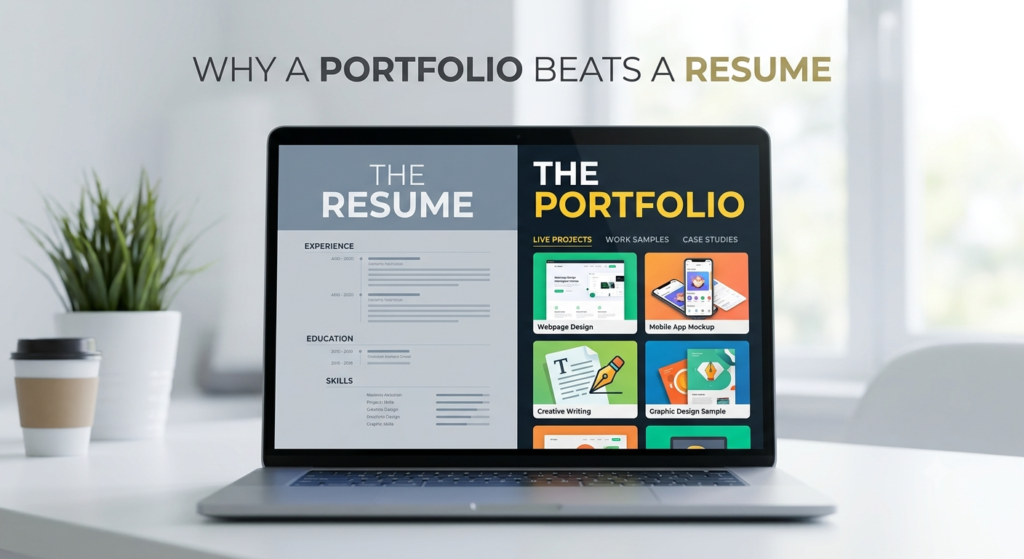
A resume tells someone what you’ve done. A portfolio shows them. When a client is deciding whether to hire a writer, they’re not mentally checking off job titles they’re trying to picture what it’d actually feel like to work with you, and whether your writing would do anything for them.
That’s why editors and marketing managers almost always ask for samples before they bother asking for a CV. A portfolio answers the one question that actually matters, usually in a few seconds: can this person write the thing I need? A resume can only point vaguely in that direction.
There’s a more practical upside too, one that took me a while to appreciate. Once a portfolio exists, it does the selling for you. One link instead of five attachments per pitch. It sits there quietly earning its keep even on days you’re not reaching out to a single person.
What Goes In It If You Have No Clients Yet

This is where most new writers freeze. If nobody’s paid you, what actually goes on the page? The honest answer is less complicated than it feels in the moment clients care about whether the work is good and whether it fits, not whether a check changed hands for it.
A few ways to fill that gap that actually hold up:
Spec pieces. Write the kind of article you want to get hired to write. Going after finance clients? Write something genuinely useful on budgeting or investing, the way you’d tackle it if an editor had actually assigned it to you.
Guest posts. More blogs and niche sites than you’d expect will take a piece from a writer with no track record, and a byline on even a small site still counts as real, published work.
A personal blog or newsletter. Writing regularly in your target niche shows two things at once that you can write, and that you actually understand the subject. It also signals initiative, which clients pick up on more than they ever admit.
Rewrites of existing content. Find a so-so article in your niche and rewrite it properly. Just say plainly that it’s a sample and not published work, and it still does exactly what it needs to.
Volunteer or nonprofit writing. Local nonprofits and small businesses need content constantly, and a lot of them will happily trade a byline for free or discounted work.
None of this is about lying your way onto the page. It’s proving what you can actually do, with work made specifically to prove it.
Picking the Right Samples

Once you’ve got a small pool to pull from, the harder part starts being ruthless about what makes the final cut. Fifteen average pieces will lose to five genuinely strong ones almost every single time. Quantity reads as padding, A tight, curated selection reads as confidence, even when it means cutting things you’re a little attached to.
Before featuring anything, run it through a few honest questions. Does this match the kind of work you actually want more of? Does it show range different tones, formats, subjects without drifting so far off that the page starts to feel scattered? Is it recent enough to reflect where your skills actually are right now, not where they were a year back?
Going after a specific niche SaaS content, health writing, personal finance, whatever it is lean hard into samples from that world. A client hiring for a specific industry wants proof you already speak its language. Not proof you can string sentences together in general.
Laying Out the Page

A freelance writing portfolio doesn’t have to be elaborate. It does have to respect a busy reader’s attention span, which, realistically, isn’t long. Most portfolios that actually work follow a fairly similar shape.
Start with a short bio who you are, what you write, who you write it for. Two or three sentences, max. Skip anything close to “passionate wordsmith” and go specific instead something more along the lines of “I write long-form SaaS content that helps B2B companies rank on Google and turn readers into trial signups.”
From there, put your best samples front and center, grouped by category if you cover more than one niche. Give each one a title, a single line on the goal or outcome, and a link or embed of the actual piece. Don’t make anyone go hunting for it.
Close with an obvious next step a contact form, an email address, a link to grab time on your calendar. A beautiful portfolio that never tells the visitor what to do next is, honestly, just wasted work.
Where to Actually Put It Online
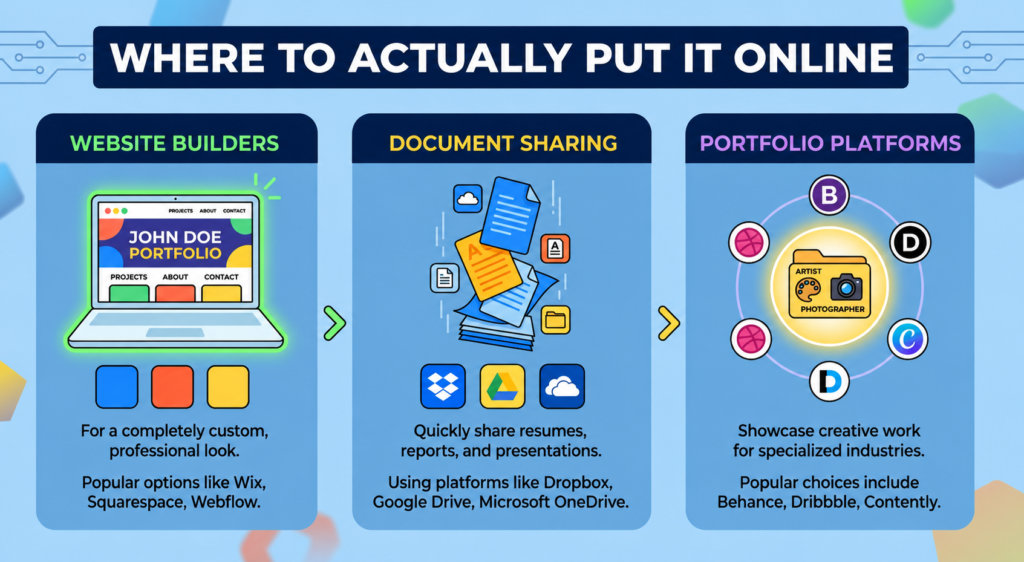
There’s no single right answer here. It really comes down to your budget, how much patience you have for technical setup, and how much control over the design you actually care about.
A self-hosted site on something like WordPress gives you the most flexibility and tends to look the most established over time, though it takes more work upfront to get it right. Builders like Wix or Square space get you live faster with a lot less technical headache, which suits writers who’d rather spend their energy on samples than on setup.
If a full site feels like too much right now, there’s a simpler fallback a clean, well-organized document, or even just a single landing page with links to your best pieces. Not glamorous, but it does the job while you sort out something more permanent.
Whatever you land on, make sure it loads quickly, works on a phone, and doesn’t bury your samples behind three clicks. Clients skim, that’s just reality. If they can’t find your work in a few seconds, they’ve already clicked over to the next writer.
Mistakes That Quietly Undercut a Good Portfolio
A handful of habits weaken otherwise solid portfolios and the writer never even notices. Throwing in every piece you’ve ever written buries the good stuff under the average stuff, and hands the visitor the job of sorting it out themselves.
Leaving old samples up long after your writing has clearly gotten better tells the wrong story about where you stand today. And skipping context no note on the goal, the audience, the result leaves readers guessing why a piece even matters. Generic taglines do a similar kind of quiet damage. “I write great content” gives a client nothing to act on. Being specific earns trust a lot faster than any adjective ever will.
Keep It Moving
A portfolio isn’t a one-and-done thing, even though it can feel that way the moment it finally goes live. As your writing sharpens and your niche comes into focus, older samples need to step aside for stronger, newer ones. A decent habit is checking in every few months, pulling whatever no longer represents your best work, and swapping in whatever actually reflects where your career is now.
That upkeep matters more than it seems like it should. A portfolio that hasn’t changed in two years quietly suggests your career hasn’t either, even when that’s nowhere close to true.
Final Thoughts
Building a freelance writing portfolio was never about showing up with an impressive client list already in your back pocket. It’s about presenting your strongest, most relevant work clearly enough that a client can picture hiring you within a few seconds of landing on the page.
Start with a handful of well-crafted samples spec pieces included, if that’s what you’ve got right now organize them with some intention, and keep the collection current as your skills grow. The portfolio that lands your first client almost never looks like the one that lands your fiftieth. That’s exactly how it’s supposed to go.
Frequently Asked Questions
How many samples should a freelance writing portfolio have?
Five to ten strong samples is plenty for most writers. Relevance and quality matter a lot more than raw number.
Can I use unpublished work in my portfolio?
Yes. Spec pieces and rewrites are completely normal early on, as long as you’re upfront that they’re samples, not published, paid work.
Do I need a website, or can a simple document work?
A website is the better long-term move, but a clean, well-organized document or a single landing page works fine while you’re getting started.
How often should I update my portfolio?
Every few months is a reasonable rhythm enough to keep it matching your current skill level and niche focus without turning into a constant chore.