
Introduction
Self-discipline is the ability to take control of yourself, make sure that you are focused on your goals, whether you feel like it or not. This is a valuable ability to develop which can enhance one’s academic performance, career, interpersonal interactions, and daily living.
But self-discipline doesn’t just happen overnight. It takes time to grow, practice it, make small decisions and repeat the habits. Many people think that disciplined people are naturally strong or motivated all the time.
The truth is that self-discipline is a skill which can be acquired by nearly anyone. As it becomes more and more practice, it becomes smoother and smoother to make better choices and stick to important goals.
What Is Self-Discipline?

Being self-disciplined is about controlling behaviours and decisions. For instance, a pupil might wish to watch TV but they decide to do their homework first. A person might want to spend the entire morning on the phone.
Self-discipline is not about inability to enjoy or unwind. It is about being aware of the priority of a task and choosing responsibly. It lets people think about the longer term rewards instead of always taking the short-term pleasure.
How Self-Discipline Starts

Little decisions sometimes set off the self-discipline process. People occasionally believe they have to start over entirely in the beginning, which is challenging. Starting with little actions usually makes sense.
If someone, for example, wishes to be more effective, he/she could decide to spend 15 minutes each day on a project that is significant to him/her. Every evening, a student could spend twenty minutes going over his/her classes.
The Role of Small Habits

Self-control is closely related to habits. A habit is a regular activity we repeat till it permeates our everyday life. Stronger good habits make them simpler to do. For example, if a student creates a study schedule, he or she can study at the same time.
A fast to-do list helps folks to follow crucial projects. Getting things done the night before can help the next day to run more easily. Not starting too many routines all at once is the key.
How Challenges Build Self-Discipline
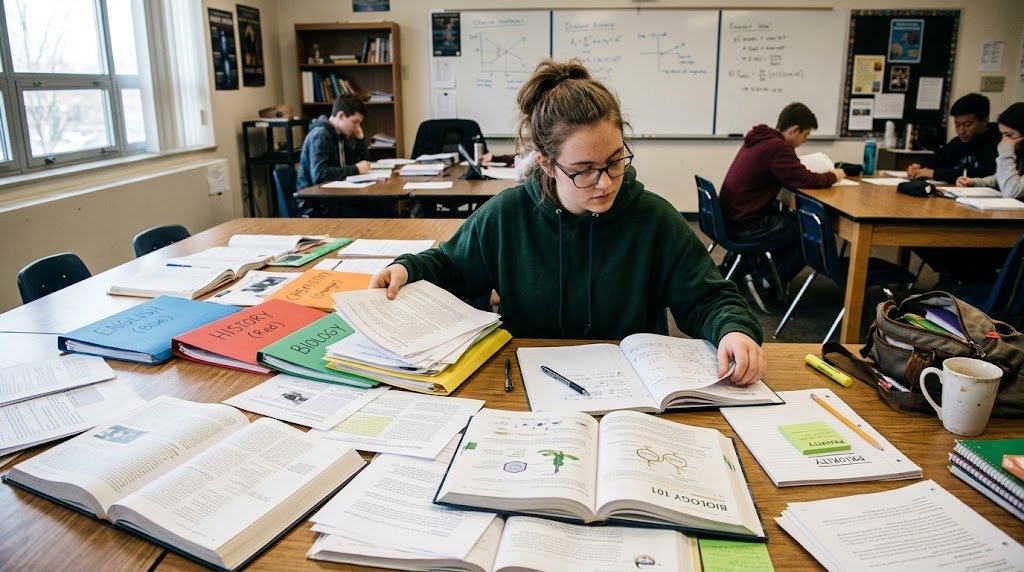
Consequently, difficulty does not necessarily impede a person from getting more self control. There might not be so much of a need to practice self-control for things that are easy. We get a chance to develop concentration skills when there are difficult situations.
A student might have several assignments that are due at the same time for instance. They don’t have to take in too much at once, rather than taking on too much work all at once they take on smaller streams of work and finish them one at a time. This is for teaching planning, patience and responsibility.
They take in knowledge when they fall short of their objectives as well. Failure to hit a goal does not imply inaction on the part of self-discipline. It can assist a person realize what they did wrong, and what they should have done.
The Importance of Consistency

Practising self-discipline for a long time is a key pillar to self-discipline. It does not take one perfect task to make a person a disciplined writer. Disciplining happens in the steps of a discipline.
For instance, it won’t waste as much time as studying for a few hours only once a day. The principle holds true for reading, exercise, learning new skills and taking care of responsibilities.
It doesn’t mean that you have to be perfect. We all experience moment to moment fatigue, the inability to focus and the letting go of motivation sometimes. The key is to get back into the routine, rather than the “storage” routine.
How Self-Discipline Changes Over Time

As experience comes and personal independence grows there is a change to self-discipline. Parents and teachers should remind a young child of responsibilities. As they get older they progressively learn to handle their time and decisions.
Students can develop the ability to plan their own homework, to revise their plans as their situation changes, to study for exams and to manage their time to balance their school work with other tasks.
One of the other highlights is that individuals grow to be higher at understanding by themselves. They discover when and what is distracting them, when they are at their best and what strategies they use to help their focus.
Practical Ways to Develop Self-Discipline
One might grow self-discipline in a number of sensible ways. First, establish practical and sensible objectives. A goal like “I will study more” is less helpful than “I will study for thirty minutes after dinner.”
Second, establish an easy everyday schedule. Knowing when you will study, work, or finish crucial assignments will help you to keep organized.
Third, cut off distractions. Make some distance from these distractions while performing crucial work if your phone, television, or social media frequently interrupts it.
Fourth, divide major projects into manageable stages. Although a major project could seem difficult, little actions help one to start.
Lastly, keep tabs on your development and be kind to yourself. Things get better over time. Learn from your errors and keep going. The goal is steady advancement not perfection.
Case Studies
Case Study 1
Students and daily study routines:
At first, distractions and a lack of routine could make it difficult for a student to study every day. Starting with only 20–30 minutes of concentrated study daily helps the student to progressively establish a regular practice. Following this schedule helps one to manage their time better and ultimately helps to make learning more manageable.
Case Study 2
Building a Regular Morning Routine:
Think about someone who routinely starts the day without a defined direction. They choose to get up at a regular time, do their housework, and dedicate the first part of the day to an urgent project. Repeating this process for a number of weeks makes it more natural and easier. This demonstrates how over time little, repetitive actions might help one to build self-control.
Frequently Asked Questions
1. Can learning self-discipline take place?
Indeed. Self-control is a talent one may hone via practice. Gradually enhanced self-control can be achieved by setting little objectives, following routines, and repeating good actions.
2. Developing self-control takes how long?
Everyone is different, hence there is no set period of time. While more significant changes can take a lot longer, some habits could become simpler inside a few weeks. Speed takes backseat to consistency.
3. Does self-discipline imply constant activity?
Not. Self-discipline is not equal to ceaseless effort. It is knowing your priorities and properly allocating your time. Rest and relaxation are also essential components of a good regimen.
4. Starting self-discipline development is the best way is what?
Start with one sensible and modest objective. For instance, every day you might work on a significant project for twenty minutes. You can progressively raise your work once the habit gets simpler.
5. Should I break my pattern, what should I do?
One terrible day should not cause you to lose hope. Determine the source of the issue, then change a little something and get back to your regular life. Continuing after mistakes is how progress is made.
6. How do routines help to strengthen self-discipline?
Recurrent routines help to make beneficial activities more familiar and simpler to follow. If good conduct is part of your daily activities, you might not have to work as hard to begin.
Conclusion
People do not just possess self-discipline at birth. Regularity, little routines, challenges, and practice help one to grow this ability. Every responsible choice provides one still more chance to develop this talent.
Beginning with modest objectives, establishing effective routines, controlling distractions, and learning from errors can simplify the process. These things start to be routines over time and those routines could affect many spheres of life.
Though it will take time, developing self-discipline is worthwhile. People may progressively get more attentive, accountable, and consistent in reaching their objectives by making daily minor good decisions.