
Introduction
Pick almost any job description right now and you’ll probably find a task sitting in there that didn’t even exist five years ago. Right next to one that used to eat up a whole afternoon and now takes ten minutes flat. That’s automation, quietly doing its thing, not the dramatic, robots-take-over version everyone pictured back in the 2010s.
More like small, unannounced shifts happening inside spreadsheets, inboxes, customer service queues, and factory floors. And this isn’t some hypothetical trend anymore, either. Government labor data shows a fifth of all U.S, employment already sits in occupations. Where at least half the work is automated and that share keeps climbing.
Especially in white-collar fields that used to feel completely automation-proof. At the same time, most companies that have picked up automation tools are still. Using them for narrow, specific tasks, not running them as core infrastructure. So the workplace right now is stuck between two speeds automation feels like it’s everywhere as a tool, yet it’s still pretty rare as a full system.
What “Automation” Actually Means at Work Today
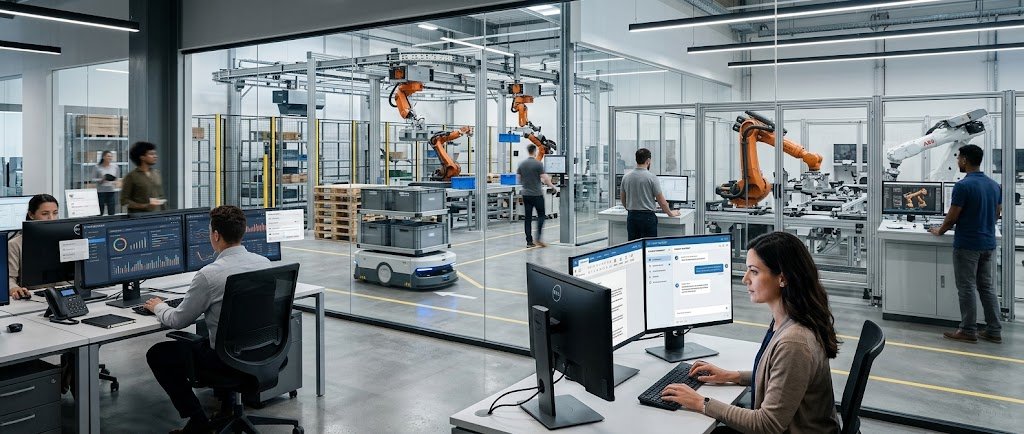
Automation used to mean physical machines replacing manual labor. Assembly lines, industrial robots, conveyor belts, that’s the old picture. Today the term covers a lot more ground than that Robotic process automation, or RPA, is software that repeats rule-based digital tasks.
Moving data between systems, generating routine reports, that kind of thing. Then there are AI-powered tools chatbots, writing assistants, scheduling agents, data analysis tools that handle work requiring a bit of actual judgment, not just repetition. Workflow automation is a bit different again.
It’s the platforms that trigger actions automatically across apps. An invoice gets approved on its own. A ticket gets routed, a follow-up email goes out and nobody typed it. And then physical and industrial automation is still doing what it’s always done robotics in manufacturing, logistics, warehousing.
Expanding the way it has for decades now. What ties all four together, really, is this automation isn’t confined to factories anymore. It’s in office work, customer service, healthcare admin, and knowledge-based jobs. That felt completely untouchable by automation a decade ago.
How Much of Everyday Work Is Actually Automated Right Now?
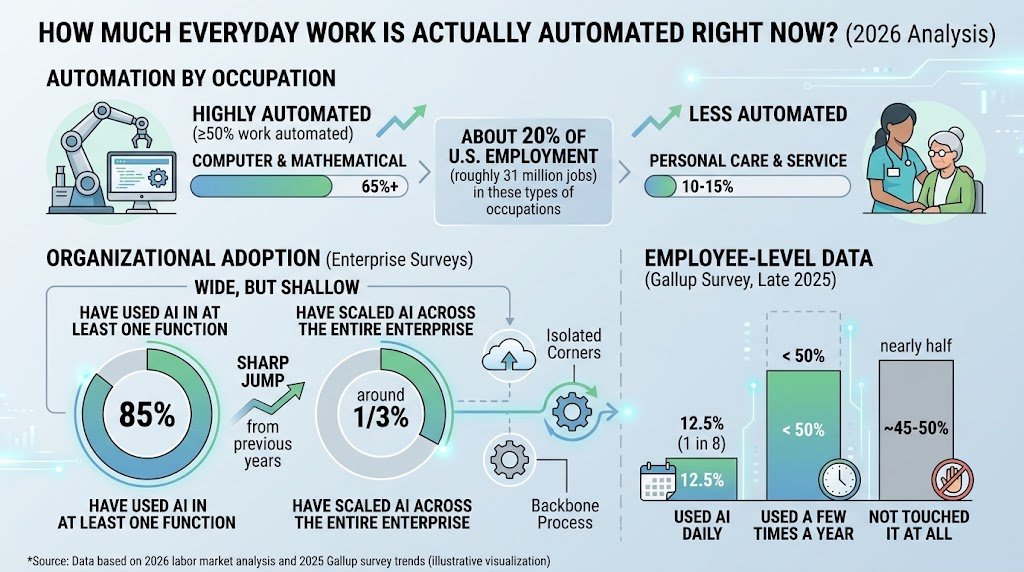
A 2026 labor market analysis found that about 20% of U.S. employment roughly 31 million jobs. Currently sits in occupations where at least half the work is automated. That number moves around a lot depending on the field. Computer and mathematical occupations sit near the top.
Personal care and hands-on service work, meanwhile, remain far less automated. Adoption follows a pretty similar pattern wide, but shallow. Recent enterprise surveys found that most organizations now use AI in at least one business function. Which is a sharp jump from just a couple years back.
But only around a third have actually scaled it across the whole enterprise. Still using automation tools in isolated corners of the business instead of as a backbone process. Employee-level data backs this up. A late-2025 Gallup survey of U.S. employees found that fewer than half.
Had used AI at work even a few times a year, and only about one in eight used it daily. Nearly half hadn’t touched it at all. So while automation is genuinely reshaping certain roles, for a huge chunk of the workforce it hasn’t shown up in any meaningful way yet not really.
Which Tasks Are Being Automated First?
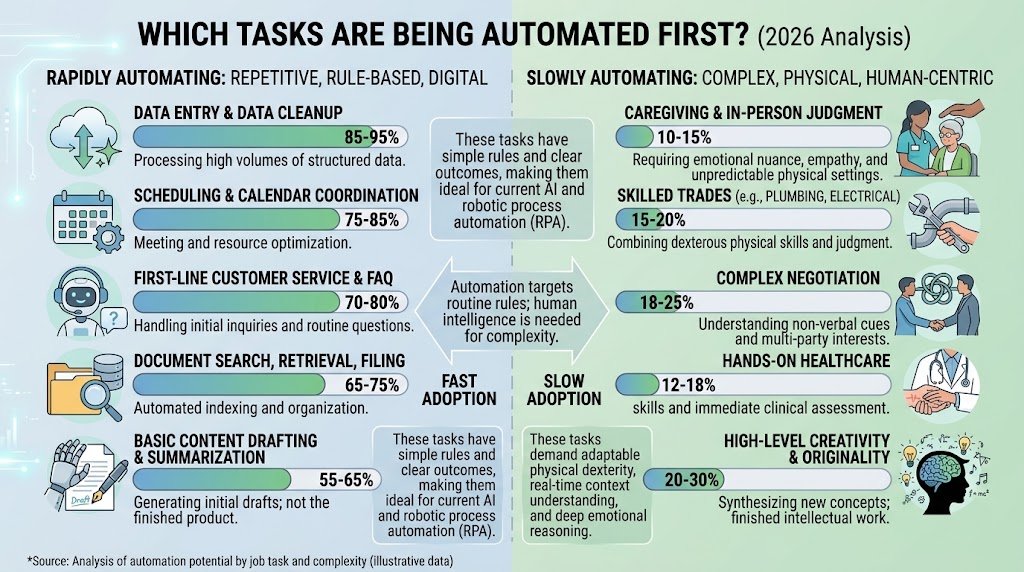
Automation spreads fastest through work that’s repetitive, rule-based, and digital. That’s basically the pattern every time. Think data entry and data cleanup. Scheduling and calendar coordination. First-line customer service and FAQ handling. Document search, retrieval, filing. Routine reporting and dashboard updates.
Basic content drafting and summarization the first-draft stuff, not the finished product. Work that needs physical dexterity in unpredictable settings, or in-person judgment. Or actual emotional nuance caregiving, skilled trades, complex negotiation, hands-on healthcare is a whole different story.
Everyday Work, Task by Task: What’s Actually Changing
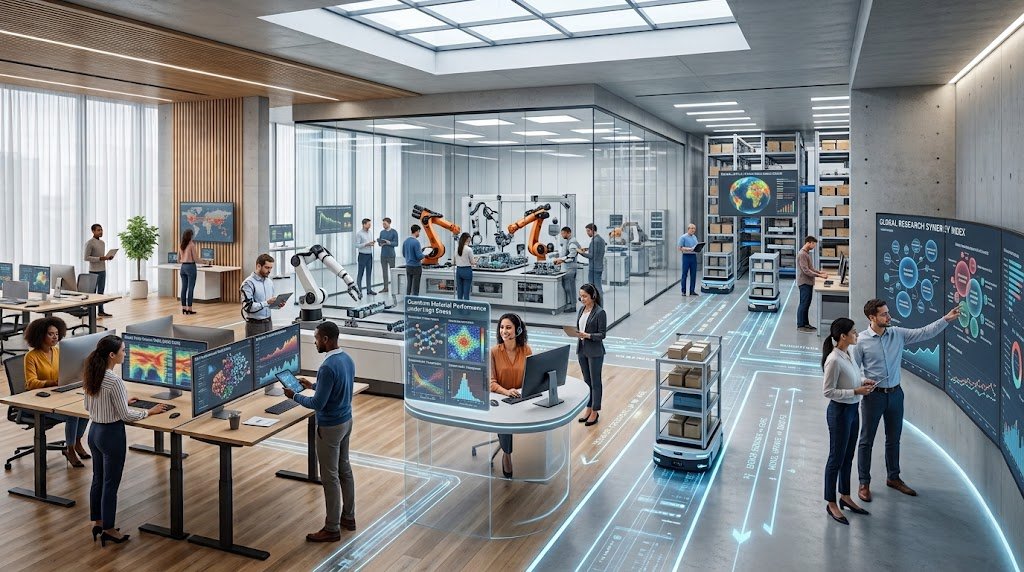
Office and Administrative Work
This is where automation has landed hardest and fastest, no contest. Scheduling assistants now handle the back-and-forth email threads that used to burn hours out of a week. Workflow tools route approvals, flag exceptions, file documents and nobody’s touching any of it by hand.
There’s a widely cited industry figure floating around that says office workers spend more time searching for documents than actually doing productive work with them. Which, if you think about it, is exactly the kind of friction automation exists to remove.
Customer Service
Chatbots and automated ticketing systems now field a huge share of first-contact inquiries especially the simple, high-volume stuff. Human agents increasingly get routed the harder conversations, the higher-stakes ones. So the job itself changes shape less “answer the same question, over and over,” more “solve the case a bot couldn’t crack.”
Manufacturing and Logistics
Physical automation just keeps expanding, steady as ever this has been running for decades already, so nothing new here in terms of direction. Robotics handle the repetitive assembly and material-handling work.
Sensors and predictive maintenance software cut down on unplanned downtime. It feels less sudden than what’s happening in offices right now, sure. But it started earlier, and it cuts deeper into certain job categories assembly-line roles especially.
Knowledge Work and Analysis
This one’s the newest frontier, and probably the one everyone’s watching most closely. First-draft writing, basic data analysis, research summarization increasingly assisted by AI tools, not fully replaced by them. Surveys of workplace AI use show chatbots and virtual.
Assistants are still the most common entry point, which tells you most knowledge workers are using automation to speed up individual tasks right now, not to run entire workflows on autopilot.
Will Automation Create Jobs or Destroy Them?
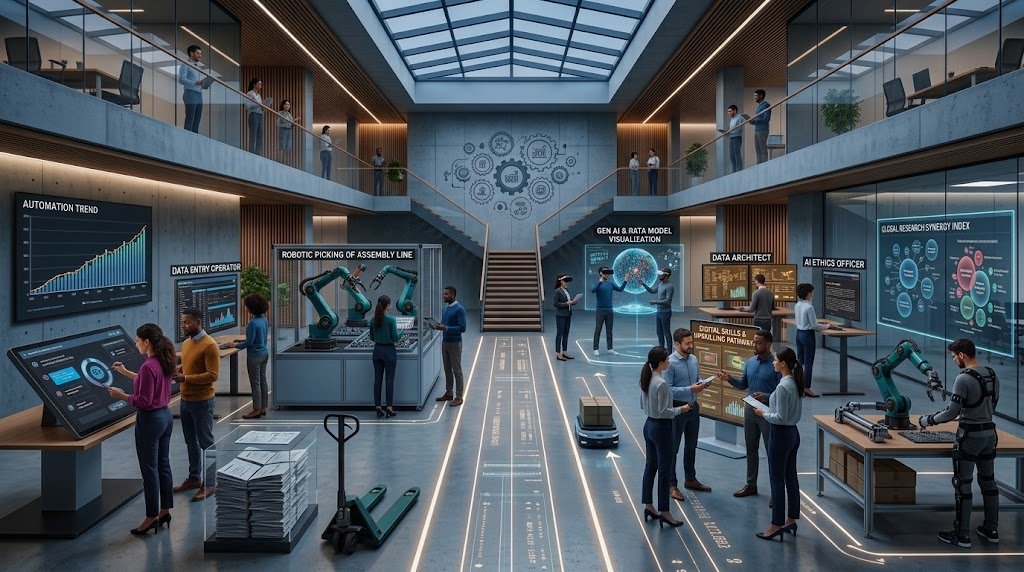
This is the question everyone actually wants answered. And honestly It’s both, happening at the same time. In different places, the World Economic Forum’s Future of Jobs Report 2025 based on a survey of over 1,000 employers representing more than 14 million workers projects that by 2030.
Automation and related trends will displace about 92 million jobs globally, while creating around 170 million new ones. Net gain, roughly 78 million jobs. Sounds like good news on paper. But that aggregate number hides something harder to swallow. The jobs lost and the jobs gained are rarely held by the same people.
Roles like administrative and executive assistant work are expected to shrink. While demand grows for AI specialists, data professionals, and roles that flat-out didn’t exist a decade ago. That mismatch is exactly why the same WEF research along with a bunch of independent.
Industry surveys keeps flagging skills gaps as one of the biggest barriers employers face. It’s also why reskilling comes up again and again as the recommended response, instead of just resisting the shift outright.
What This Means for Employees
For most people, automation isn’t going to wipe out their job overnight. It’s going to chip away at parts of it instead. The practical shift usually looks like moving from doing a task to overseeing it, checking it, improving whatever the tool already produced. A few patterns show up again and again in the research.
Repetitive, rule-based tasks shrink first if a big chunk of your role is predictable and digital, expect automation to reach it soonest. Judgment-heavy, relationship-heavy work holds up a lot better, since context, empathy, negotiation, and physical presence are still genuinely hard to automate.
Knowing how to actually work with the tools matters more than just working alongside. Them plenty of employers are already prioritizing this kind of training. And reskilling isn’t treated as a nice-to-have anymore. It’s basically expected now, especially in industries where automation is moving fastest.
What This Means for Business Owners
For business owners and managers, here’s the real lesson buried in the research adopting automation isn’t the win by itself. A large share of organizations already use automation somewhere but far fewer have actually folded it into how the business runs day to day.
That gap is where the real productivity gains are hiding. It’s also, unfortunately, where most of the risk sits half-finished automation projects, confused employees, that whole mess. A sensible approach looks less like “automate everything” and more like this start with high-friction.
Repetitive tasks that are easy to measure document routing, scheduling, first-line support. Keep humans in the loop for judgment calls, exceptions, and anything customer-facing at a high-stakes moment. Invest in training right alongside the tools.
Because the data consistently shows adoption without training creates more confusion than it solves. And track outcomes, not just adoption using a tool somewhere in the business isn’t the same thing as that tool actually improving output.
Real Life Examples
Case Study 1: Procter & Gamble
The Rakona plant of Procter & Gamble in the Czech Republic benefited from sensors, software and automation to enhance production. The plant boosted output by 160% and customer satisfaction by 116% in three years. The company also engaged employees in the process of identifying automation opportunities.
Case Study 2: Western Digital
Western Digital brought automation using AI to help detect maintenance issues and enhance repairs. The system helped to lower repair time, increase accuracy, and trained employees to be proficient in using the new system and technology.
Frequently Asked Questions
Is automation going to take over most jobs?
Not most, and not soon. Current data shows about a fifth of U.S. employment sits in heavily automated occupations, and adoption at the organizational level is still broad but shallow. A lot of companies are using automation tools in a limited way, not as core infrastructure.
Which jobs are most at risk from automation?
Roles built around repetitive, rule-based, digital tasks data entry, basic admin work, routine customer service, some assembly-line manufacturing roles. Jobs needing physical adaptability, complex judgment, or in-person relationships hold up better.
Will automation create more jobs than it destroys?
Global projections say yes, net positive tens of millions more jobs created than displaced by 2030, according to World Economic Forum research. But the jobs created need different skills than the jobs lost. That’s exactly why reskilling sits at the center of nearly every major report on this.
How can I make my job more automation-proof?
Lean into skills that combine technical fluency with judgment, communication, or hands-on expertise those are the areas automation still struggles with. And actually learning the tools, instead of avoiding them, keeps showing up as linked to better job security in the current research.
Is automation the same as AI?
Not quite, Automation’s the broader category any technology performing tasks with reduced human input, from simple rule-based software all the way to physical robotics. AI is a subset of that, the part that can handle judgment, language, or pattern recognition instead of just fixed rules.
Do small businesses need to worry about automation too?
Yeah, more than ever, honestly. Automation tools have gotten cheaper and way more accessible, and a growing number of small and mid-sized businesses are picking them up specifically to keep pace with bigger companies that automated earlier.
What industries are adopting automation the fastest?
Tech and financial services mostly computer-based work have moved fastest. Retail, hospitality, and other in-person service industries have moved a lot slower, according to recent workforce surveys.
Should employees be afraid of automation?
Some concern’s fair, sure. But the research suggests adaptation matters more than fear does. Employers overwhelmingly say they plan to train staff to work alongside automation rather than just replace. Them outright which shifts the real risk toward people who avoid learning the tools, not toward automation itself.
Conclusion
Automation isn’t arriving as one big dramatic moment, and it never really was going to. It’s arriving task by task. Inbox by inbox. Spreadsheet by spreadsheet. The data lines up with what most people already sense at work anyway. Some parts of the job are getting faster and easier.
While entirely new skills are quietly becoming necessary just to keep up. The jobs that disappear and the jobs that get created aren’t the same jobs and that’s exactly why this shift feels so uneven depending on where you happen to be sitting. The people and organizations coming out ahead aren’t the ones automating the most.
They’re the ones being deliberate about it about where automation genuinely helps. Where human judgment still matters, and where ongoing training closes the gap between adopting a tool and actually benefiting from it. Everyday work is changing.
No question about that. The most useful response isn’t to fight it, and it isn’t to chase every new tool that shows up either it’s to understand where the shift is actually heading, and build the skills that stay valuable either way.