Introduction
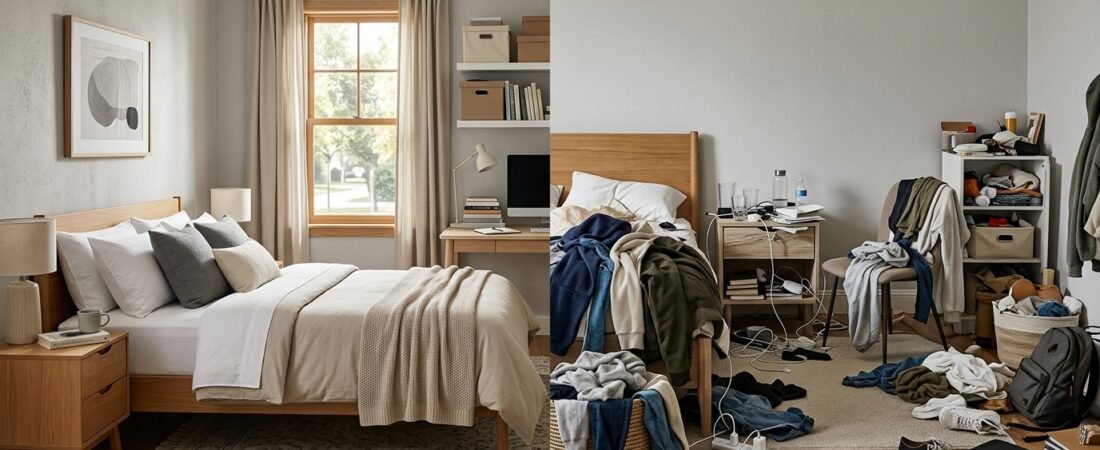
Sunday, the room’s spotless. By Wednesday, you can’t find your charger. Three days, that’s usually all it takes, it’s not that you’re lazy. Most people just never fixed the actual problem. Every item in the room never had a real “home” to go back to. So it lands wherever’s convenient. And after a week or two, wherever’s convenient becomes wherever it always is.
Once that clicks, keeping a room organized stops feeling like a personality trait. And starts feeling like something you can actually build, on purpose. That’s what this is about, why clutter messes with you more than you’d guess. How to actually declutter a room without giving up on day two, and what keeps it that way once the work’s done.
Why an Organized Room Matters More Than It Seems
Clutter Affects Focus, Not Just Appearance
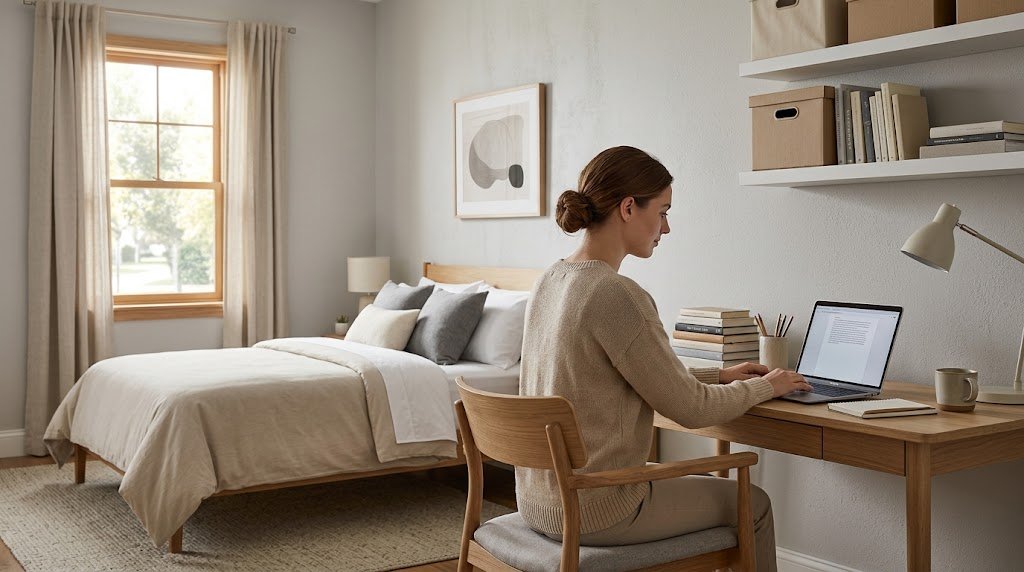
In 2011, researchers at the Princeton University Neuroscience Institute found that multiple objects. That vie for your attention reduce activity in the visual cortex area of your brain that processes visual information.
In other words, your brain can only take so much clutter takes up some of that real estate. A cluttered room is more than just an ugly room. It’s going against you when you are working, studying, or just sitting and breathing.
Clutter Is Linked to Stress Hormones
UCLA’s Center on Everyday Lives of Families spent years studying dual-income households. And they found something worth noting homes packed with more objects. Correlated with higher cortisol the stress hormone especially in the women running those homes.
There’s also a 2010 study that looked at this day by day. People who saw their home as cluttered had cortisol that stayed high all day, instead of tapering off like it normally does after the morning.
Clutter Is a Safety Issue Too
And this isn’t just a mood thing. Extension researchers have pointed out that cluttered floors and excess belongings raise the odds of falling at home. Falls, by the way, are the leading cause of injury related death for adults over 65, according to the CDC.
So this stops being a minor inconvenience pretty fast. None of this is about having a magazine ready room. It’s about less friction day to day, a clearer head, and honestly, a space that’s just safer to be in.
Step 1: Declutter Before You Organize

Talk to any professional organizer and they’ll all say some version of the same thing don’t buy the bins first. If you do, you’re just giving your clutter a nicer place to sit. One extension housing specialist calls this “storing before sorting”. And it’s probably the single most common mistake people make when they decide to “finally get organized.”
The Four-Category Sort
Pick one small area, a drawer, a shelf. One corner of the room, nothing more. Then sort everything in it into four piles.
- Keep you’ve actually used or wanted this in the past year
- Donate works fine, you just don’t need it
- Trash broken, expired, done
- Relocate wrong room entirely
The University of Georgia Extension recommends 10 to 15 minutes per session, not a whole weekend. Because short sessions get finished. And finishing something, even one drawer, does more for your motivation. Than an ambitious plan you abandon by hour three.
The “Maybe” Box
Stuck on an item toss it in a box, label it, and mark a date three months out. Don’t touch it again until then. If you never went looking for it, you already have your answer. This one trick alone removes most of the decision fatigue that makes people quit halfway through.
Step 2: Give Every Item a Home
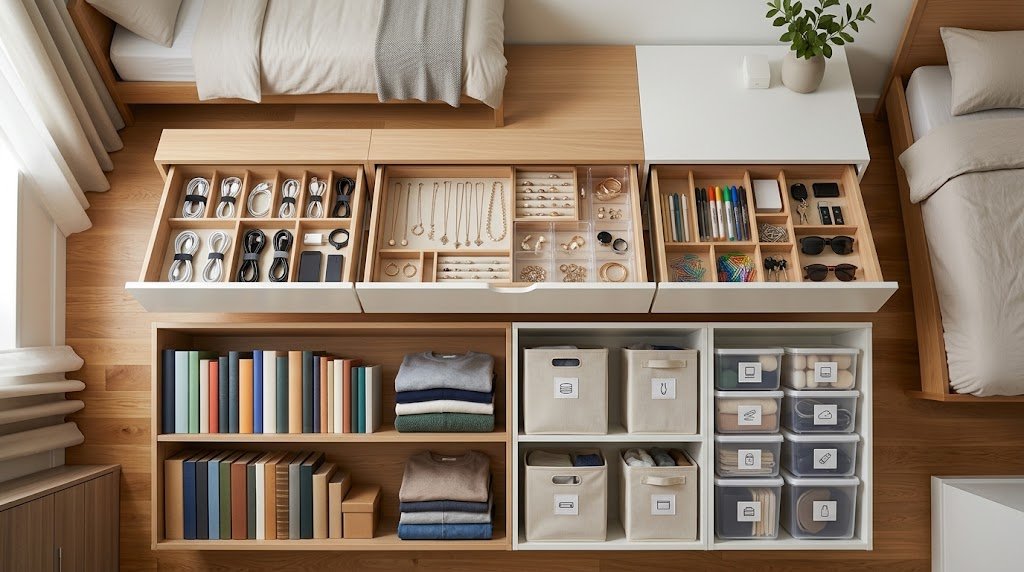
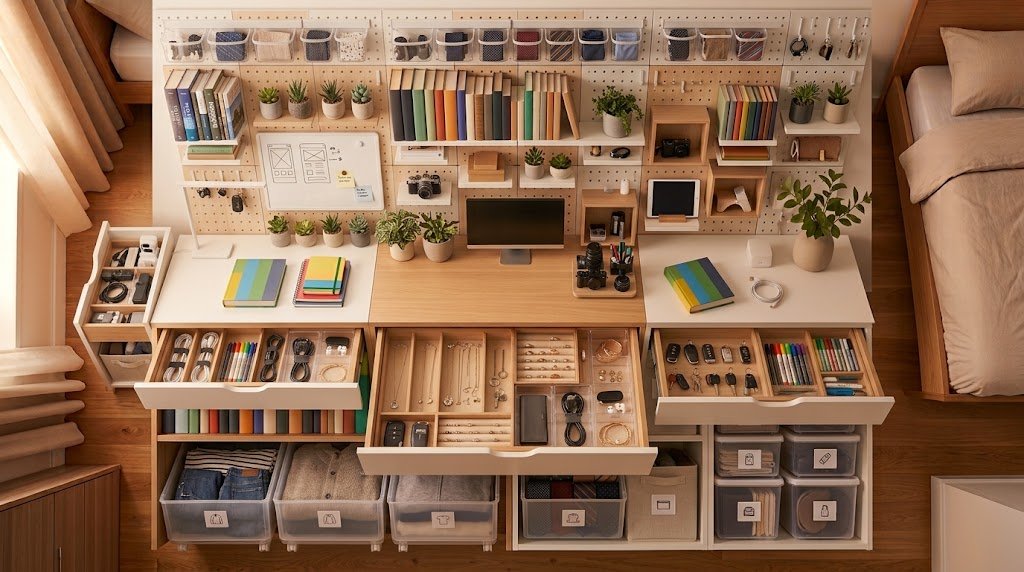
Once the pile’s smaller, here’s the part that actually decides whether this sticks or you’re back to square one in a month. Every single item needs one specific spot. Not “somewhere in this general area” an actual shelf, hook, drawer, bin. That’s it, that’s basically the whole secret. No product on the market does what this one habit does.
A few ways people apply it:
- Drawer dividers, so chargers, jewelry, random stationery each get their own little slot instead of turning into one big pile.
- Grouping like with like books together, cables together instead of letting things scatter across whatever surface happened to be free.
- Labeling containers, or just going clear, so anyone in the house can find and return things without a guessing game.
- Daily-use stuff stays visible on the desk or nightstand; everything else gets tucked away.
Step 3: Build a Maintenance System, Not a One-Time Clean
The One-Touch Rule
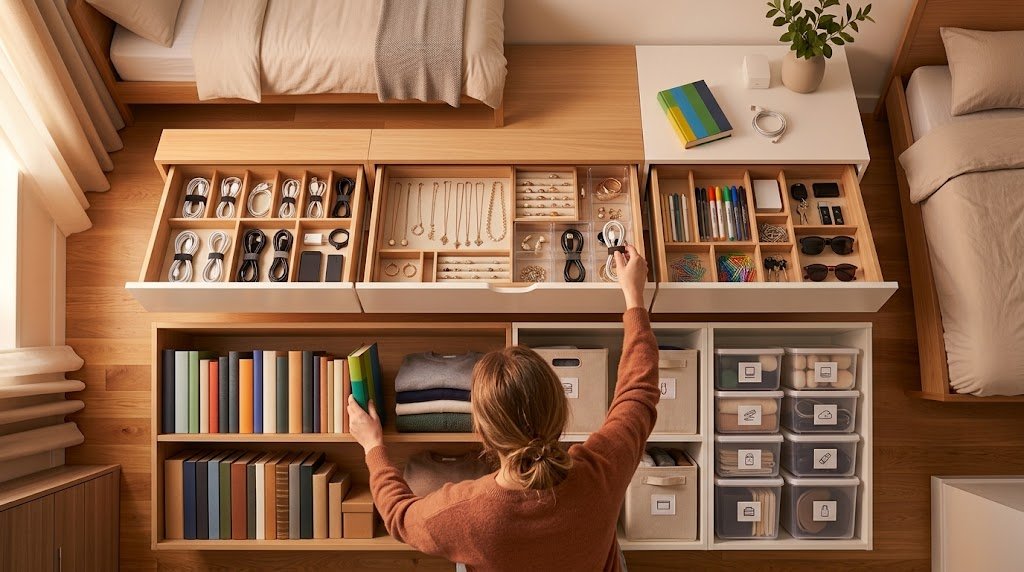
Touch it once, put it back the second you’re done, not “in a bit.” That habit of setting something on a chair “just for now” is basically the entire lifecycle of clutter, playing out one small decision at a time.
The One In, One Out Method
You’ll hear this from just about every professional organizer out there. Bring in something new, something old goes out. Works especially well for clothes, books, electronics anything you tend to accumulate duplicates. And there’s a bonus, it slows down impulse buying, because you already know you’ll have to make room for whatever you buy.
A Short Daily Reset
Five, maybe ten minutes before bed, just put things back. That’s it, compare that to letting a week’s worth of mess pile up and then losing your Saturday morning to it.
A Weekly Deeper Check
Once a week, go over the spots that quietly collect junk desks, dressers, nightstands and clear them properly. This is what catches whatever the daily reset missed.
Room Organization: Before vs. After a System
| Without a System | With a System |
|---|---|
| Items placed wherever there’s space | Every item has one designated home |
| Cleaning happens in occasional large pushes | Small daily and weekly resets |
| Storage bought before decluttering | Decluttering happens first, storage added after |
| Clutter reappears within weeks | Clutter is caught early through routine |
| Decision fatigue over what to keep | “Maybe” box removes the need for instant decisions |
Common Mistakes That Undo Room Organization
- Buying organizers before decluttering. All you’ve done is give clutter a nicer container.
- Trying to do the whole room in one sitting. Exhausting, rarely finished, hard to repeat.
- Skipping the “one home per item” step. Skip this and any tidying you do is temporary, by design.
- Treating it as a one-time project. It’s not a project. It’s a habit you keep, or it doesn’t stay done.
Real Life Examples
Case Study 1: Princeton Neuroscience Institute – Visual Clutter and Focus
When several objects vie for attention within the visual field, the researchers at Princeton University found that the brain’s capacity to process information is much diminished. When a room is cluttered, your mind will have to filter out all of the unnecessary stimuli in the room, leaving less mental energy for you to concentrate on. Consequently, a clean room truly helps to concentrate and minimize mental fatigue.
Case Study 2: Yale University – Clutter and Brain Information Flow
Yale researchers found in a 2024 study that visual clutter impacts how information actually moves through the brain, rather than how distracted a person feels. The quantity and location of clutter have a definite influence on how the brain processes what it sees. This proves that tidy doesn’t only mean pretty, it’s also got the power to improve the ways your mind works.
Frequently Asked Questions
How often should I declutter my room?
A light seasonal declutter, paired with daily tidying and a weekly reset of busy surfaces. Is usually enough to stop clutter from ever building up into something overwhelming.
What’s the fastest way to organize a messy room?
Pick one small zone a drawer, a shelf instead of tackling the whole room. Sort it into keep, donate, trash, relocate, then give what’s left a real home. Small finished zones beat a big plan you never finish.
Do storage bins actually help keep a room organized?
Only after you’ve decluttered. Otherwise you’re just organizing things you didn’t need in the first place. Sort first, buy storage second.
How do I keep a small room organized without more furniture?
Go vertical wall shelves, over-door organizers, under-bed storage and be strict about one in, one out. Small rooms don’t have room for extra.
Why does my room get messy again so quickly after I clean it?
Probably because things don’t have one fixed spot, so they end up wherever’s easy. Give every category one home, back it up with a quick daily reset, and it tends to sort itself out.
Is a cluttered room actually linked to stress?
Yes, UCLA’s Center on Everyday Lives of Families found that homes with more clutter correlated with higher cortisol, particularly in whoever’s managing the household.
What’s the one in, one out rule?
For every new item you bring home, one existing item leaves. Works best once you’ve already decluttered, and it’s one of the simplest ways to stop slow buildup before it starts.
Should I organize by category or by room area?
By category, usually. Sorting all your clothes together, or all your books together, tends to show you duplicates and excess a lot more clearly than working area by area.
Conclusion
Organized room does not mean a perfectly organized room each and every day. It’s about establishing an uncomplicated system that will keep your space more manageable.
Take things out of the way that you no longer need, then assign a “home” to each of the items you have. Don’t try to clean the room, but get into the habit of cleaning small areas.
Regularly cleaning up for a few minutes a day will help to avoid the accumulation of clutter. Few simple practices such as cleaning up after using, an 1:1 rule and resetting weekly can make a enormous difference over time.
Cleaning becomes more routine-based, and it doesn’t seem like such a big job. The idea is not to have a perfect room, but a room that is comfortable to be in, that is functional, and easy to keep clean.