Introduction
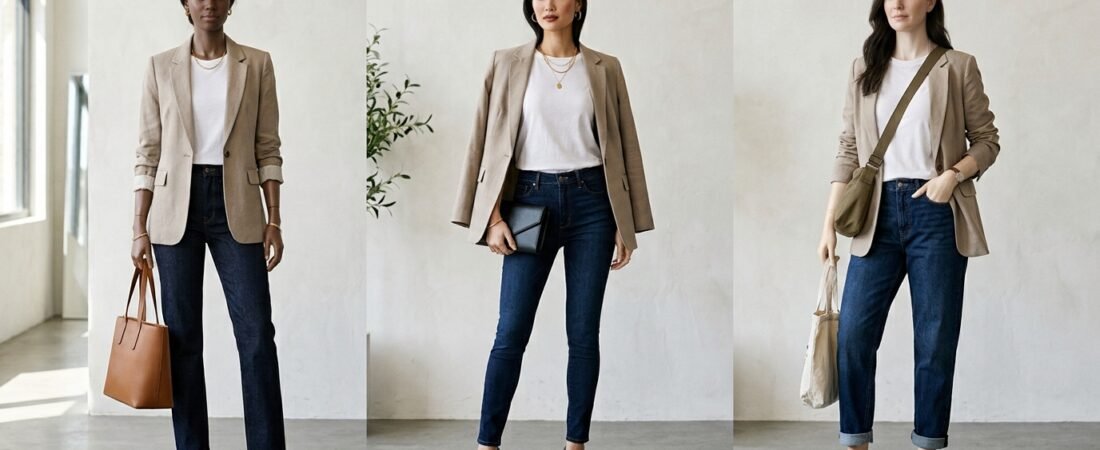
A white t-shirt, dark jeans, a blazer. None of that sounds interesting written down like that, and honestly, it isn’t not on its own. But put those three things together the right way. And you’ve got a work meeting outfit, a dinner outfit, and a saturday-errands outfit.
All from the same three items, and nobody’s going to notice you’re repeating anything. That’s the whole idea behind learning how to style basic clothes in different ways. You don’t need a bigger wardrobe. You need a few tricks for combining what’s already in it.
And there’s a reason this is worth more than a passing thought. The EPA puts U.S, textile waste at somewhere around 17 million tons a year. With only about 14.7% of it recycled the rest gets landfilled or burned. So actually wearing fewer pieces, more times, isn’t just a minimalist aesthetic choice.
It’s basically one of the only levers a regular person has in an industry. That operates at a scale most of us don’t really see. So here’s a rundown of the techniques that actually work.
Layering, proportion, color pairing, dressing things up or down. Accessories along with two research case studies, sources linked, showing. What happened when real people tried living off a small, versatile wardrobe instead of a full one.
What Counts as a “Basic” in Your Wardrobe?
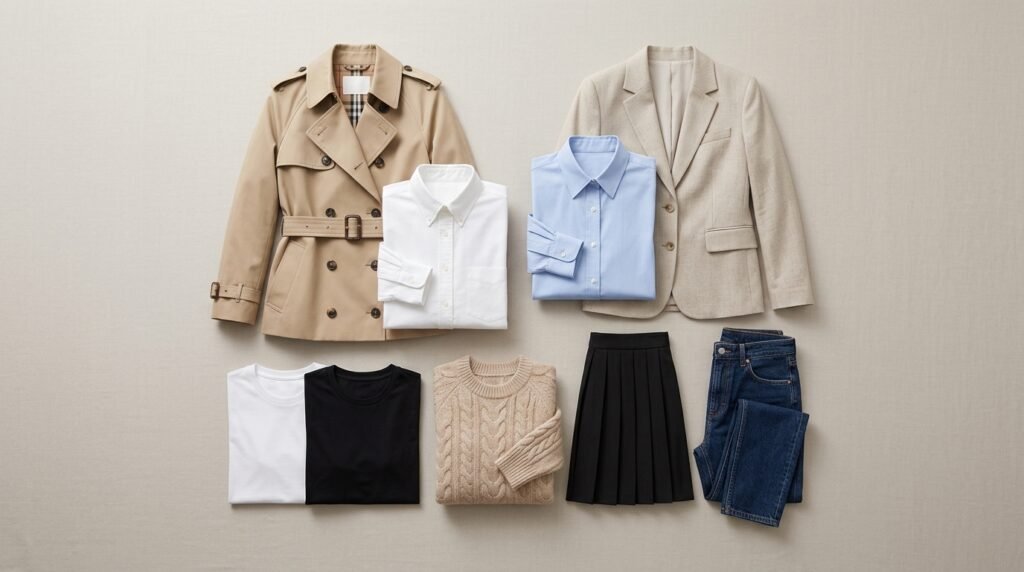
A basic, loosely speaking, is anything simple in cut, close to neutral in color, and not depending on a print or a trend to justify itself. A short list:
- A white or black crewneck t-shirt
- A button-down in white, light blue, or chambray
- Dark or mid-wash denim
- A neutral blazer or tailored jacket
- A knit sweater in a solid, muted tone
- A midi or A-line skirt in black, navy, or camel
- A trench coat or a plain wool coat
Nothing on that list is going to turn heads by itself. That’s sort of the point the value isn’t in any one piece. It’s in how easily each one plays with the others. Which is exactly what lets a small wardrobe feel bigger than it actually is.
Why Basics Are Worth Styling Well
The Math Nobody Really Explains
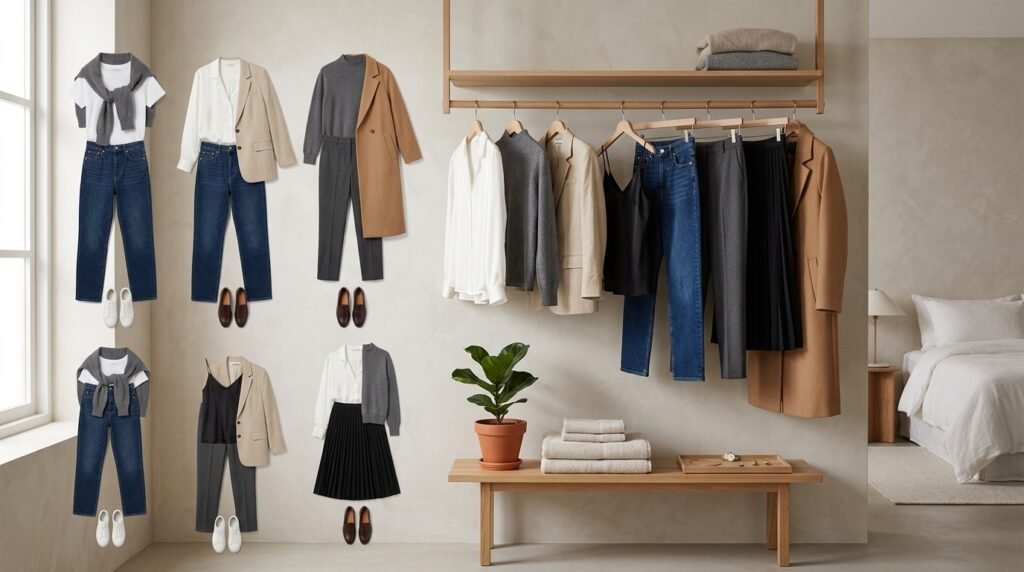
Basics work because the combinations stack up fast. Ten interchangeable pieces three tops, three bottoms, two layers, two pairs of shoes. Roughly speaking can turn into dozens of genuinely different outfits. Ten trend pieces that each only match one or two other things you own not even close.
This is more or less the entire logic behind the “capsule wardrobe” idea a small. Deliberately built set focused on versatility instead of volume. Not a new concept either, it’s been around for decades. And got a real push from Donna Karan’s “Seven Easy Pieces” collection back in the 1980s.
What the Research Actually Found
Fashion researchers have started paying closer attention to what happens. When people commit to a smaller, more versatile wardrobe instead of a bigger, single-use one. Two studies are worth going into here.
Core Techniques for Styling Basic Clothes Differently
1. Layering Changes the Whole Silhouette
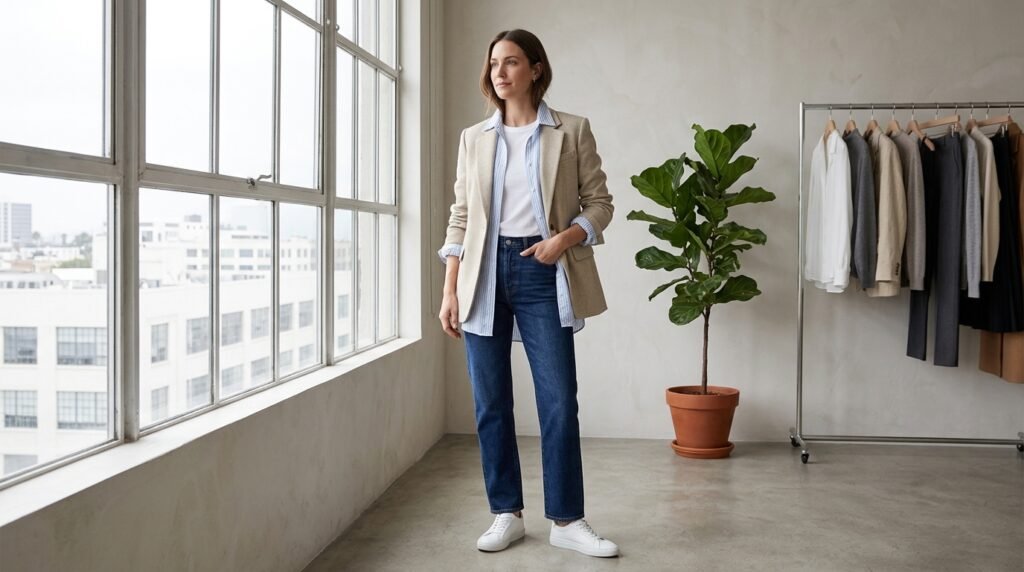
Layering might be the fastest way to make one item feel like three. A plain t-shirt worn alone reads one way. Add an open button-down and a blazer on top. And it’s a different outfit entirely same shirt, doing something completely different. A couple of things keep it from looking like an accident:
- Vary the lengths, a longer top peeking out from a cropped jacket shows more thought than a disheveled outfit.
- Go beyond colors, combine different textures for contrast, like soft cotton with heavier knit. This creates visual contrast without patterns.
- Limit yourself to two or three shades for the whole look, so it doesn’t seem like you’re wearing multiple unrelated outfits at once.
2. Play With Proportion
The top is the same but the bottoms are quite different. When you’re stuck for a way to dress up a loose t-shirt. Simply tuck it in into a neat pair of tailored trousers, and it’s instantly complete. Toss the same shirt over wide-legged jeans and it’s casual.
More like an outfit for a day at the office. One of the most classic fashion tips is about balancing loose with fitted largely. Because it works on the entire outfit, rather than introducing a single piece.
3. Use Color Pairing Instead of Buying New Colors
Here’s a cheap one you don’t need new colors. You need new combinations of the colors already sitting in your closet. A neutral basic white, black, gray, navy, camel color can help bring a set of accent colors into a rotation.Whether accented in a scarf, bag or shoes. Blending colors (camel over tan, for example) is another form of tonal dressing.
4. Dress the Same Piece Up or Down
One garment, several settings, just by changing what surrounds it.
| Item | Dressed Down | Dressed Up |
|---|---|---|
| White button-down | Untucked over jeans, sleeves rolled | Tucked into a skirt, top button open, blazer on top |
| Black dress | Sneakers and a denim jacket | Heels and statement earrings |
| Dark jeans | T-shirt and sneakers | Silk top and loafers |
5. Let Accessories Do the Talking
Belts, bags, jewelry, shoes this is the cheapest way to change a basic’s whole personality. A structured belt gives an oversized shirt shape it didn’t have before. A bold necklace turns a plain crewneck into something you’d actually wear out. Swap sneakers for loafers, and the exact same jeans-and-tee combo shifts from running errands to meeting someone for coffee.
6. Repeat Pieces on Purpose
Something a lot of people miss here deliberate repetition. Is what separates a well-styled basic wardrobe from a boring one. Wearing the same blazer three different ways in a single week. Instead of quietly avoiding it because you already wore it Tuesday. The trick is styling around the repeat different shoes, a different layer, different accessories.
Common Mistakes When Styling Basics
- Treating “basic” as “boring” and stopping there. A neutral piece is a starting point, not the finished outfit.
- Buying more basics instead of styling the ones already owned. Another white t-shirt doesn’t add outfit combinations if it’s styled exactly the same way as the last one.
- Ignoring fit. A basic that doesn’t fit well drags down everything it’s paired with, and it matters more here than usual, since there’s no print or detail to distract from a bad fit.
- Sticking to one shoe style. Footwear probably shifts an outfit’s formality more than anything else on the body.
Real Life Examples
Case Study 1: How a Limited Wardrobe Encourages Creativity
A study which involved 7 women found that a more limited capsule. Wardrobe encouraged participants to think more creatively about combining and reusing outfits. The participants were able to use less clothing and came up with new ways to wear their existing outfits.
Case Study 2: Three Week Capsule Wardrobe Essay
An experiment conducted on 37 women showed that practicing a capsule. Wardrobe for three weeks resulted in an increase in subjective happiness (SCH). Minimalism, wellbeing, and sustainability were the main variables that were studied in the experiment. The study was published in Wiley Online Library.
Frequently Asked Questions
What are the best basic clothing items to start with?
A white t-shirt, dark jeans, a neutral blazer, a button-down shirt, and one versatile dress. Or skirt cover the widest range of occasions with the fewest pieces.
How many outfits can you really make from a capsule wardrobe?
Depends on the pieces, honestly, but a solid set of 10–15 versatile items usually turns into 20–30+ distinct outfits once layering and accessories get involved.
Is a capsule wardrobe the same thing as minimalism?
Not exactly, minimalism is the broader lifestyle idea, owning less overall. A capsule wardrobe is narrower it’s a styling strategy built around squeezing the most versatility out of a smaller set of clothes.
Do basic clothes actually save money?
Usually, yes, mostly by cutting down on impulse buys for one-occasion items. The savings come from owning fewer, better pieces that mix with more of. What’s already there, not from any single item being cheap.
How do I keep a basics-heavy wardrobe from feeling repetitive?
Rotate the accessories, layers, and shoes rather than the core garments. And add in one or two seasonal accent pieces to keep the palette from going stale, without replacing the basics themselves.
Can basic clothes work for formal occasions?
Yes, a well-fitted basic in a decent fabric a black dress, tailored trousers. A crisp shirt can go formal with the right accessories heels, structured jewelry, a clean overall silhouette.
Does being good at styling basics truly help to reduce apparel waste?
Since a garment that lasts longer means it needs to be replaced less frequently. Getting more actual use out of less clothing directly challenges one cause of textile waste. Furthermore, experts researching capsule wardrobes discovered. That participants really changed toward more deliberate purchasing practices later.
Conclusion
Layering simple garments to create simple, yet interesting shapes is not. As difficult as it sounds, pairing colors (rather than adding new ones), adding layers. And letting repetition do its work for you (but not against you). There’s no need to have a bigger closet for any of that. Just a little more thought to the one that hangs there.
And the research backs this up from two different directions. People who actually tried a small, versatile wardrobe said. They felt calmer about getting dressed and less pulled toward chasing every new trend. And people who studied their own habits through a capsule project walked away with real.
Usable ideas about buying and wearing clothes more intentionally. Given how much of what Americans throw out every year. Still ends up landfilled instead of recycled, learning to actually style. What’s already owned might be one of the more useful habits out there. It just also happens to make Monday mornings a little easier.